Knife Games and the Cost of One Misplaced Cut
Three cutting games, three completely different punishments for a bad stroke — graded, multiplicative and catastrophic. Each one demands a different hand speed.
Cutting is the only action in a cooking game that is scored on geometry. Everything else is a selection — this ingredient, that plate — but a cut has a position and an angle, and the game has to decide how wrong is too wrong.
Three titles in this library answer that question three different ways, and the answer changes how fast you should be moving your hand.
Graded: the error becomes a score
Slice it Up has the most explicit precision model here. From its own instructions: “Swipe your finger or move the mouse across the screen to make a cut. The closer the line is to the perfect center of the object, the higher your score. Try to be as accurate as possible to earn three stars and unlock new levels!”
Two properties matter. The score is continuous in the error — there is no cut-off where a stroke stops counting — and the gate is a star threshold, not a perfect run. That combination rewards a specific strategy: cut immediately, accept two stars on awkward shapes, and only retry the levels standing between you and an unlock. Deliberating costs you nothing in this game except time, which means deliberating is almost always wrong.
Multiplicative: the miss costs more than the miss
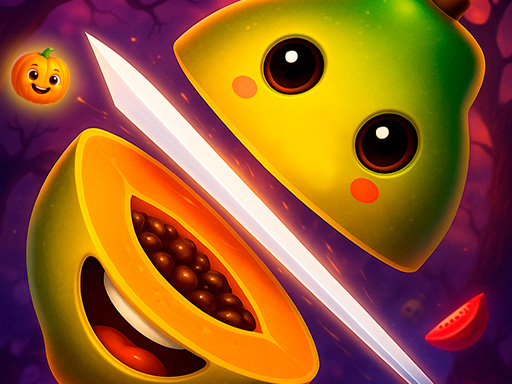
Halloween Fruit Slice scores each stroke as a hit or a miss, which sounds more forgiving than a graded model until you read the second clause: “Each clean cut adds points, and rapid successive strikes build powerful combos to boost your score. Miss a fruit or hit a bomb and your streak breaks.”
A broken streak does not cost you one fruit — it costs you the multiplier you had accumulated, so the price of a single bad stroke scales with how well you were doing. The correct hand speed is therefore not constant across a run. Early, while the multiplier is small, speed is cheap and you should push. Deep into a streak the same aggressive swipe is an expensive bet, and the game’s real skill is knowing when to become conservative.
Catastrophic: one wrong move ends the piece
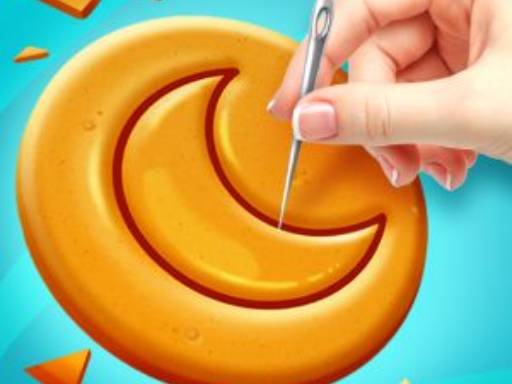
Dalgona Master sets the strictest tolerance in the library: “Carefully carve out various honeycomb shapes like hearts, animals, umbrellas etc. from the crunchy Dalgona candy without cracking the entire piece. Each level ups the ante with increasingly complex designs, testing your steadiness and precision.”
There is no partial credit and no streak to protect. The piece survives or it does not. Under a catastrophic model the optimal play inverts completely: you move slowly, you stop at corners, and the hard part of the game becomes pausing rather than cutting. It also explains the 1080×1920 canvas — a tall portrait frame puts the whole carve under your thumb at the largest possible scale, which is exactly what a low-tolerance design needs.
Cutting as a gate, with no failure at all
Most chopping in this library is not scored in any of those ways. Pizza Realife Cooking describes the step as “start the recipe by chopping up the ingredients and place them in different bowls,” and Homemade Pizza Cooking asks you to “help her to cut the vegetables to decorate the pizza.” Neither text mentions accuracy, speed or failure. The knife here is a progress gate — a thing you do to advance the recipe, with the interesting decisions happening later at the topping stage.
That is worth knowing before you go looking. Chopping appears in dozens of recipe games; chopping that is measured appears in very few.
A warning about the category filter
If you browse Prep Station expecting knife work, calibrate your expectations. That shelf holds 26 games, but across the entire 294-game library only two carry a slice tag — and both are filed under Fast Food, not Prep. The one knife-tagged title actually sitting in Prep Station is Knife Master : Ball Racing, and its instructions make clear what it really is: “The ball is bouncing up as it drop to the handle of the knife. As you throw knife higher as much possible, the ball bounce up higher.” That is a knife-throwing arcade game, not prep work.
Tags survive the category mapping better than categories do. If you want cutting, search the tag; if you want a specific punishment model, read the instructions line for the words score, combo or without breaking — each one tells you how fast to move.