Recipe on Screen or in Your Head: Two Schools of Cooking Game
Whether the recipe stays visible while you cook decides if a game tests routing or recall — and the penalty design tells you which school you have landed in.
There is a fork in cooking game design that changes what skill you are actually practising, and it is decided by one UI choice: does the order stay on screen while you build it?
Keep it visible and the game is about routing — the fastest path through a set of known steps. Hide it and the game is about recall under load, which is a different muscle entirely and ages differently when you come back after a week away.
The visible-recipe school
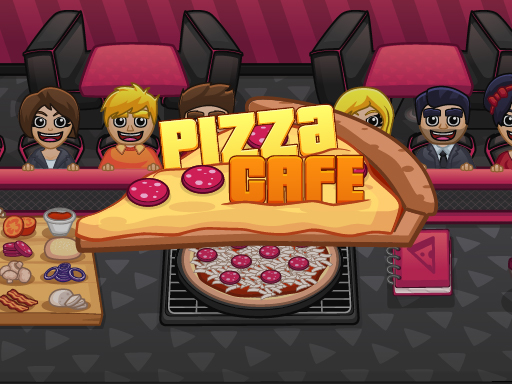
Pizza Cafe is the clearest case in the library. Its description instructs you to “refer to the recipe cookbook, prepare the pizzas, and serve the customers.” The cookbook is a permanent fixture, so knowing the recipe is worth nothing; only your hands are being measured.
Yummy Super Burger does the same thing with a checklist rather than a book — “prepare the ingredients by following every part on the task list until your burgers are ready to sell.” A task list is a stronger form of the same crutch, because it also tracks which steps you have already done. You cannot lose your place.
Burger Time Game keeps the recipes visible but attaches a global fail state: “Prepare the dish they want, following the recipes, and collect points! Don’t upset too many customers or you will lose the game!” Note what that combination means. Because the recipe is free, the only way to lose is throughput. Every failure in this design is a speed failure, never a memory failure.
The 11 Sara’s Cooking Class titles here — including Mini Pop Tarts and Berry Cheesecake — sit at the extreme end of this school. They are built as guided walkthroughs, one step prompted at a time, with no memory demand and no clock demanding you hurry between steps.
The recall school
Chopstick Cooking is the only title in the library tagged memory, and it earns the tag: its own description calls it a “cook and memory genre with unique mechanic,” where you “serve the customer by catching the flying ingredients and making the perfect burgers.”
The penalty design is what makes it a recall game rather than a reflex game. “Do not put the wrong ingredients, otherwise, the customer can upset and reduce your time.” A memory slip does not cost you the order — it costs you clock. That is a deliberately soft punishment, and it is the right one for a recall design, because hard-failing an order you misremembered would just teach you to stop guessing.
The order-matters middle ground
A third group shows the recipe but makes the sequence itself the challenge. Candy Cake Maker describes the loop as “you’ll first have to make the dough, by adding all the ingredients in the right order like in a real recipe.” You are not recalling what goes in; you are being held to when. That is a much gentler ask than blind recall and a much stiffer one than a free-order assembly screen.
This middle group is where most baking titles live, and it is why baking games generally survive a long gap between sessions better than service games do. Sequence knowledge is reconstructable from the ingredients on screen; a hidden ticket is not.
A caution on reading the instructions field
You cannot always tell which school a game belongs to from its listed controls. One title in this library, Mutton Biryani: Sara’s Cooking Class, ships an instructions line that was clearly pasted from an unrelated game — it talks about aquariums and dolphin tricks. Publisher-supplied metadata is written for a storefront, not for you, and the game page’s control readout is only ever as good as what the publisher typed.
The reliable test takes ten seconds: start an order, then look away from the ticket. If the information you need is still on screen, you are in a routing game. If it is gone, you have joined the recall school, and the sensible move is to play a short session often rather than a long one rarely.
Both shelves are worth browsing — the routing-heavy titles cluster in Restaurant Rush, the sequence-driven ones in Baking & Desserts.